



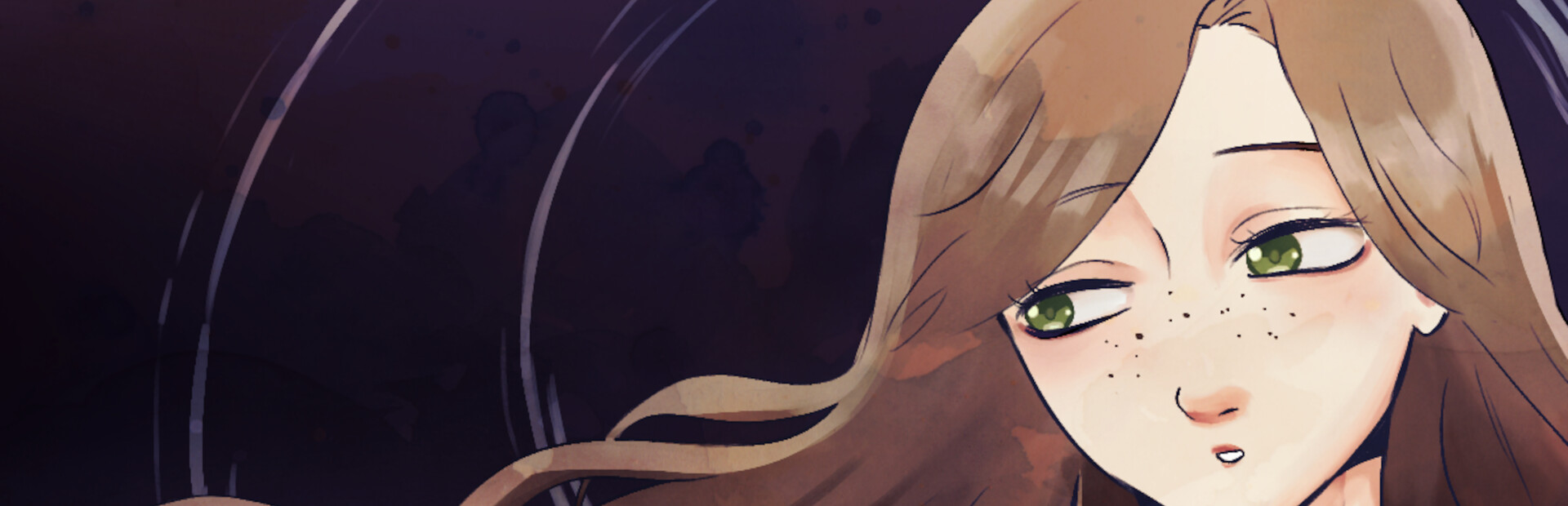

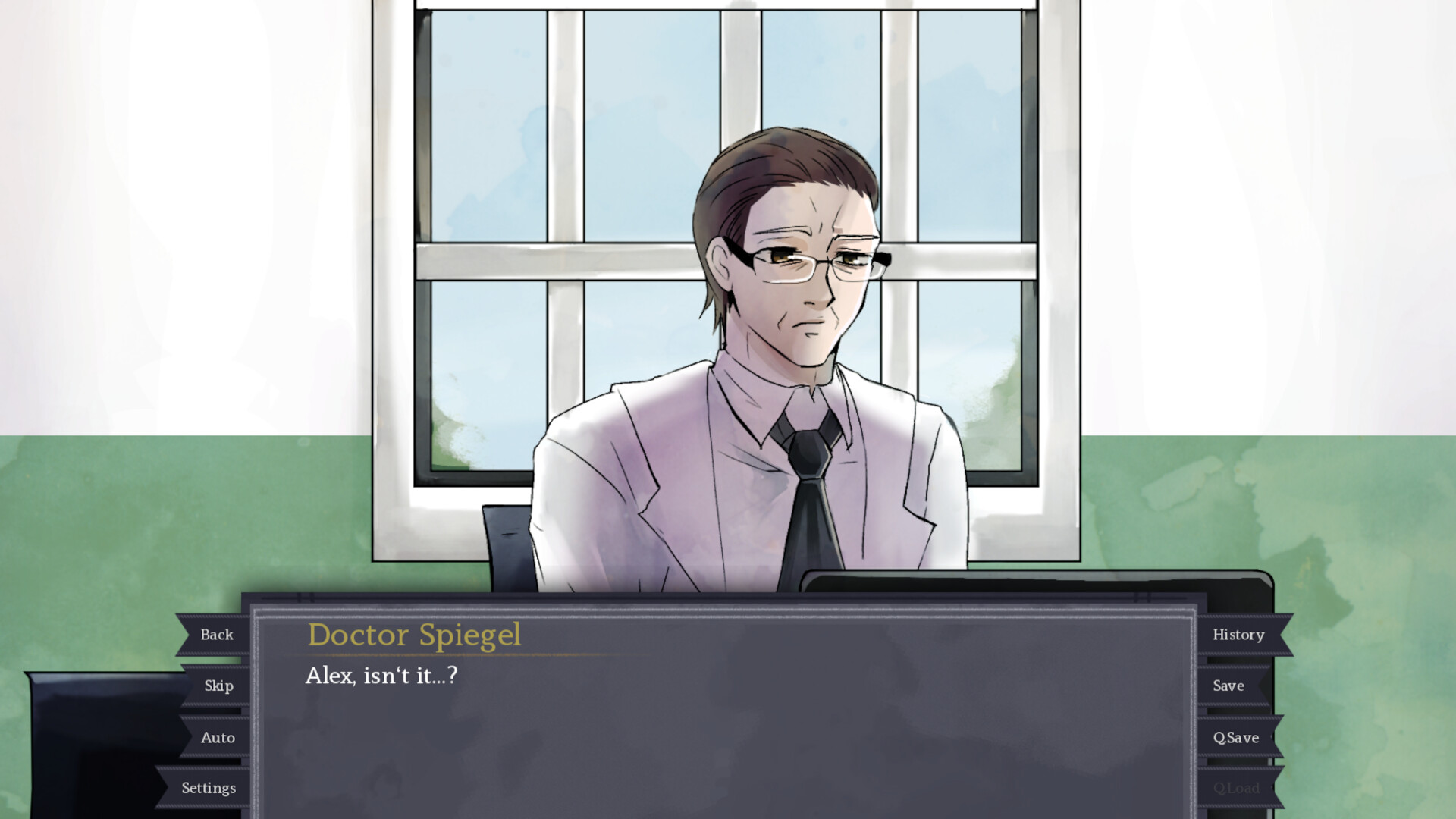

Challenge fate in this psychological visual novel about a juvenile psych ward patient who discovers a book that can predict the future.
Take on the role of Alex, a teenager struggling with mental health, as she finds herself in the middle of a supernatural mystery. There are secrets to uncover in this ward, but putting the pieces together will not be easy. Forge your own destiny in this tale of recovery and finding happiness – is it true that fate cannot be changed?
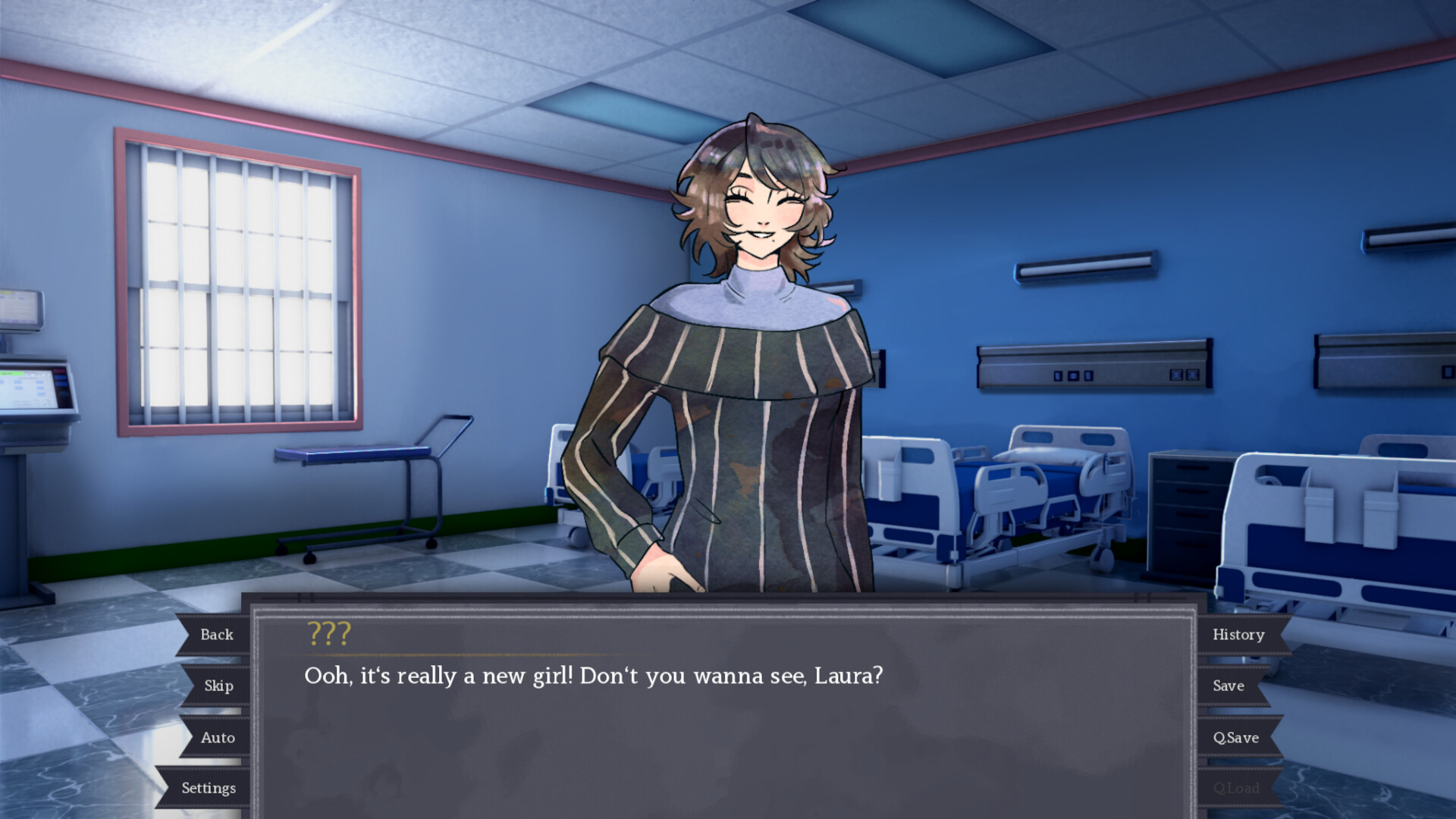
Choose who you want to be friends with and get to know your fellow patients. You can't be close with everyone, and everyone has something to say. Form a meaningful friendship with one person or a superficial acquaintance with three – the choice is yours.
Key features
An authentic depiction of a juvenile psychiatric ward based on real-life experience
3 characters to befriend (or not)
A mostly linear story with 1 ending and additional scenes based on choices
Fully original graphics, including CGs
Fully original soundtrack
All stories need characters. In Pages of Tomorrow, the player meets an array of them but some, obviously, are more important than others. The three that I will very briefly introduce here are arguably the most crucial, as the player is constantly choosing between them, deciding on their companion for the playthrough. So, without further ado, here are the three people Alex can choose to befriend on her journey.
Jolene

Jolene is a kind, cheerful girl whom Alex the game's protagonist shares a room with. Her smile never seems to fade, much like her positive attitude. In fact, her positivity can get overwhelming in an environment mostly made up of depressed teens. Something must be hiding beneath that smile of hers... Just what could she be doing in a place like this?
Nigel

Nigel's demeanor is relaxed and jovial; he's always looking for ways to make people laugh. With his charisma and quick wit, Nigel could have it all and yet, he's stuck in the ward with the other patients. His carefree act won't make it easy to get his true feelings out of him, but some things are worth the hassle.
Cole

Despite being the youngest of the cast, Cole likes to behave like he's the toughest. His teenage angst gives him a rebellious, blunt personality; he isn't concerned with being polite or empathetic. Cole was sent to the ward against his will, but perhaps it was for the best... What issues lie underneath the tough guy act?
You will meet all of these characters and more very soon when the demo arrives this December. Wishlist Pages of Tomorrow to get a notification when that happens!
https://store.steampowered.com/app/4021250/Pages_of_Tomorrow/
Genre, helpful as it can be for self-identification, is a commitment and a promise. With genre come certain expectations, tropes, and other things the writer must be aware of. Keeping that in mind, calling Pages of Tomorrow a "mystery" visual novel doesn't quite do it for me. I will try, to the best of my ability, to explain why that is and why I settled on "psychological" instead.
Pages of Tomorrow isn't a thriller. It's not a visual novel that has fight scenes or chase sequences; while it has its exciting moments, and the mystery itself is gripping, moments of superficial relaxation are just as important. In Pages of Tomorrow, showing the daily lives of the patients isn't just buildup for showing something out of the ordinary, but something that's valuable in itself.
A psychological visual novel is one that gets deep into the characters' psyche; how they act, and especially how they think. Seemingly unexciting scenes become interesting and unique when approached from this angle. An ordinary conversation can become a vessel for symbolism, giving the audience a look into the characters' heads and that's precisely what I want for Pages of Tomorrow.
Focusing on characters who are by definition out of the ordinary, as mentally ill people, ensures their reality isn't boring to the general audience. After all, it is very different to what most people are accustomed to in their lives. I believe the term "psychological" describes Pages of Tomorrow perfectly, as it literally is a story focused on the complexities of human psychology, or perhaps even psychiatry.
Thank you for making it to the end. As always, I invite you to wishlist Pages of Tomorrow those who do will be notified immediately when the demo becomes available.
As some of you may already know, Pages of Tomorrow aims to portray mental illness and psychiatric care as accurately as possible. The ward where the story takes place is the beating heart of the plot it dictates what the characters can or cannot do, what they are like, and even how they think. Here's a little deep dive where I explain my process for portraying it the way I do.
Any artist, upon choosing to show something that exists in real life in their work, has to answer a simple, but difficult question. How much do I lie? Whether it's because they are unable to show reality as it is or reluctant to do so (for various reasons), artists and that includes writers often rely on the audience's lack of knowledge to push something that just isn't factual. And it's a good thing they do art isn't about imitating reality in all possible aspects. Pages of Tomorrow lies, too. But at the same time, it tells the truth exactly as much as possible without sacrificing certain parts of the experience.

Ultimately, Pages of Tomorrow aims to deliver an accurate experience of what it's like being in a psych ward (specifically one for juveniles), and many parts of how it does that are taken directly from real-life scenarios. Life itself often writes the best fiction. Although research was necessary, and it certainly taught me a lot, the way I portray the psych ward will always be most influenced by the way I experienced the psych ward. But even then, selecting the memories I share is also a way of fictionalizing, and when a serious topic is fictionalized, care is needed.
The thing I'm most cautious about is the balance between demonizing and romanticizing this form of psychiatric care, both of which are a bad way of talking about it. On the one hand, the experience is indeed traumatizing for many, but on the other, psych wards and hospitals (or "asylums") have been demonized to hell and back through stories and portrayals coming from people who didn't know much about them.

I sincerely hope and I'm pretty confident the hope is not foolish that Pages of Tomorrow can portray the psych ward in a way that both acknowledges the trauma of the experience and doesn't discourage from seeking help when it is needed.
If you haven't wishlisted Pages of Tomorrow yet, I invite you to do so. It is a psychological visual novel I'm making set in a juvenile psych ward, with supernatural mystery sprinkled on top. Wishlist to be the first one to know when the demo drops!
I am thrilled to announce my new psychological visual novel, Pages of Tomorrow. Are you ready to challenge fate?
Take on the role of Alex, a teenager struggling with mental health, as she finds herself in the middle of a supernatural mystery. There are secrets to uncover in this ward, but putting the pieces together will not be easy. Forge your own destiny in this tale of recovery and finding happiness is it true that fate cannot be changed?
https://store.steampowered.com/app/4021250/Pages_of_Tomorrow/"" style="color:#bb86fc;text-decoration:none;">Wishlist Pages of Tomorrow on Steam right now .
Minimum Setup
- OS: Ubuntu 20.04 or newer
- Processor: 1 GHz or fasterMemory: 1 GB RAM
- Memory: 1 GB RAM
- Graphics: OpenGL 3.0 support
- Storage: 1 GB available space
[ 6446 ]























[ 1067 ]



























[ 2596 ]

























Time left:
356134 days, 4 hours, 1 minutes

Time left:
356134 days, 4 hours, 1 minutes

Time left:
10 days, 12 hours, 1 minutes

Time left:
10 days, 12 hours, 1 minutes

Time left:
22 days, 12 hours, 1 minutes

Time left:
29 days, 12 hours, 1 minutes

Time left:
22 days, 12 hours, 1 minutes

Time left:
22 days, 12 hours, 1 minutes

Time left:
0 days, 6 hours, 1 minutes

Time left:
1 days, 6 hours, 1 minutes

Time left:
2 days, 6 hours, 1 minutes

Time left:
2 days, 8 hours, 1 minutes

Time left:
4 days, 6 hours, 1 minutes

Time left:
4 days, 6 hours, 1 minutes

Time left:
9 days, 6 hours, 1 minutes

Time left:
11 days, 6 hours, 1 minutes
Time left:
16 days, 6 hours, 1 minutes

Time left:
18 days, 6 hours, 1 minutes


